

The journalist cracking the TikTok code
Mia Sato was tired of watching news influencers steal her work.

Embedded is your essential guide to what’s good on the internet, written by Kate Lindsay and edited by Nick Catucci.
I was inspired to post a TikTok after this conversation and it flopped. —Kate
New on ICYMI: Catfish is over, but it’s more relevant than ever.
Head over here to subscribe to ICYMI wherever you listen to podcasts 🫶
A few years ago, journalists began dipping their toes into short-form, front-facing video content. It turns out that many of them were better spokespeople for their work than their company Twitter account could ever be. The New York Times now routinely features their own writers on their Instagram feed, and The Washington Post is introducing a feature that allows writers to respond to comments via video, similar to how TikTok works.
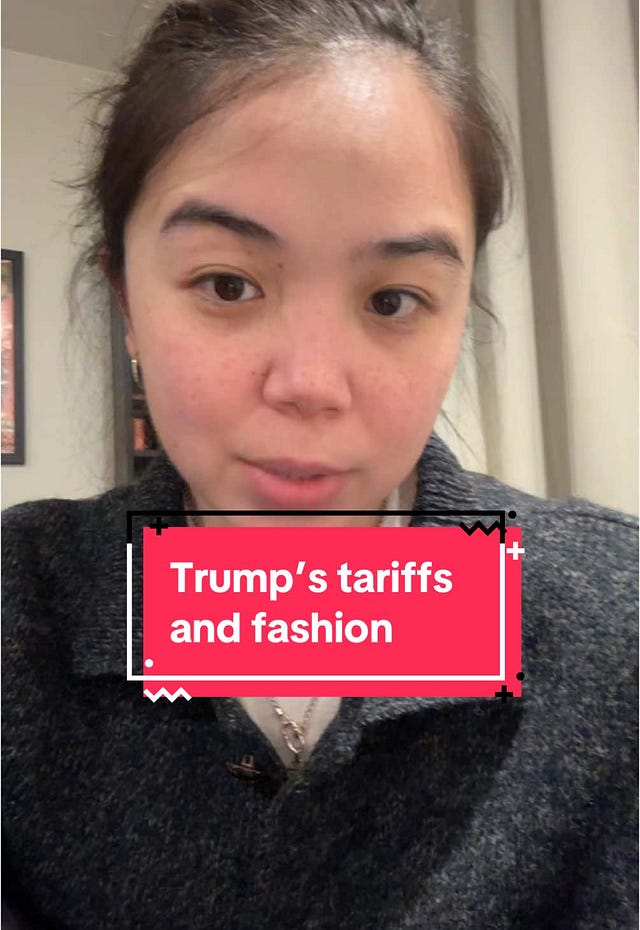
But these institutions have been playing catch-up with journalists like The Verge’s Mia Sato, who were the ones to first crack this code. Mia routinely appears on my FYP discussing her features on topics like those Chinese factory worker videos and the effects of Trump’s tariffs, using the platform as a tool for both promotion and sourcing. Her presence is the first I’ve seen where TikTok and journalism work together, instead of the latter getting clumsily shoehorned into the former.
Mia got started working in audience engagement, and it’s clear how that experience gave her the necessary insight to succeed on TikTok. I got on a call with her to ask her some questions about her work and what other journalists can learn from her social media ethos.
How did you get started in journalism, and how would you describe your work?
I am a senior reporter at The Verge. I write about tech companies, their platforms, and their users, and then also where culture and the internet collide, which is in a lot of places. I have been at The Verge for around four years, but I actually started in journalism working in audience engagement roles. I was running the social channels for nonprofit newsrooms, getting their Instagram presence started, thinking about how readers would find our work, and how to get in front of them. So I’ve always thought really hard about things like, where does our work exist as journalists out in the world, and how can we do a better job of putting it in more places? So around five years ago, I did a mini pivot. During COVID I had an epiphany moment where I was like, actually I think I just want to write and report full-time. So I’ve been doing reporting. I did some freelance stuff before that as well. But since 2020 I’ve been a full-time reporter and obviously my audience engagement experience is still a big part of how I do my reporting.
Was it your experience working in that intersection that got you interested in covering it?
It kind of accidentally happened, to be honest. But because I was spending so much time thinking about how these platforms work from the user perspective, I also was very interested in the industry propping them up and the decisions of the people in charge of them. So in a lot of ways I think it was a really natural fit.
In terms of getting your work in front of people once you became a writer, were you experimenting with any other platforms before TikTok?
I’ve been on all the platforms. You really hate to see it, but I have tried a lot of different things. I have an Instagram. I obviously was on Twitter for years. Now I don’t post there anymore and we can talk about why later. I use Bluesky a lot. I have been dabbling in LinkedIn although I hate that for myself. And also trying to do as many media requests as possible, going on podcasts, going on radio, going on TV. So I try to take a very multi-pronged approach to getting my stuff out there, always trying to remind myself that I have to be the biggest advocate for my work.
 Tiktok failed to load.
Enable 3rd party cookies or use another browser
Facebook and Twitter were successful tools for journalists in the sense that you could post a link and someone could click the link. And that is not really what we’re working with anymore. With something like TikTok, a reader has to leave TikTok to go find your article. What does success look like to you when it comes to getting your work out there?
I’ve wrestled with this a lot, because everything that we do that is not reporting and writing, it takes away from the reporting and writing. So I think I’ve tried to reframe it more as, am I getting a good deal for the amount of work or time that I’m investing in a thing? So that’s why I’m not on X anymore, because posting there is not worth it to me when links are throttled, when I have to pay to get more visibility on the platform as a subscriber. So I dropped it. Bluesky is different. It takes me two seconds to write a post, and my links can travel, and click-through is pretty good. So that, to me, I’m like, that’s fine. I’ll do that. Because I’m trying to reframe things in my mind as like, what free work for different tech platforms am I willing to do? And what am I not willing to do?
TikTok is like...I’ve gone through different phases as I’ve posted more and more. I’ve realized that I don’t really need to spend that much time doing the videos, and that was the thing that was frustrating maybe a year and a half ago, which was it would take me a really long time to record and edit and tweak my TikTok content and it would only get like 500 views. And to me that wasn’t worth it. But when I started being faster and also more off-the-cuff with TikTok, then I started seeing the benefits. And so I have a very strict timeframe for myself. If I’m going to make a TikTok for my story, I give myself 30 minutes. That’s it. That’s all I get to spend. Because if it flops then I’m gonna be mad that I spent time doing that and got not that much out of it. But if every video is only taking me 15 to 20 minutes to record and post, that’s fine.
 Tiktok failed to load.
Enable 3rd party cookies or use another browser
I similarly deleted Twitter earlier this year and decided not to get on Bluesky because I wanted to change my relationship to these platforms more generally. And so the attitude I am taking is less, “Here’s my story. How can I get clicks for that story?” And more so, “a rising tide lifts all boats.” Like if I can just get myself out there, then hopefully the writing gets uplifted as well.
The tech platforms purposely make it really hard to refer out and to click links. So is someone being aware of your work, in a different format, good enough for you even if they don’t read your story? I’m a writer. If they don’t read my story, is it enough that they listen to me talk about it? And I think I’ve had to be really honest with myself and say yes. I think right now that maybe is enough. Because to be honest, even my very nice friends who I love so much, I know sometimes they don’t read my stories. They know about my stories. They know about what I’m working on. They know where my head is. And I know the way that information travels is often word of mouth. And if they know about a story, they can share it with someone else, and the chain keeps going. And I think that is like the hope with TikTok.
But I have to be so real and say a big reason I’m active on TikTok is because I am so stubborn, and I was getting really sick of seeing my work being used for other people’s content. I was like, I don’t like this. You are getting facts wrong. You’re using my words as your green screen background with your big head in front. I think it’s crazy that there’s this concept of news influencers and they’re not reporters. I said this on Bluesky months ago where I was like, I feel like as journalists we’re ceding ground to content creators who don’t know left from right, who didn’t report the stories, who don’t have the expertise to explain this to a general audience. And I don’t like that. I don’t like the idea of us taking some of it lying down. And so part of me being on TikTok is honestly being the representative for my own work. I want to speak for myself, I want to speak for my reporting. And you know, obviously people do still use my work in content, but at the very least, now I’ve gotten to the point where people who follow me will see my video, see my stories in other videos, and tag me and be like, “Mia was the original reporter.” And that is meaningful to me on a personal brand level, but also I think this is all an exercise to build trust with readers.
TikTok is a very discourse-y platform in a different way from Twitter. When you put your story out there on TikTok, how do you engage with feedback?
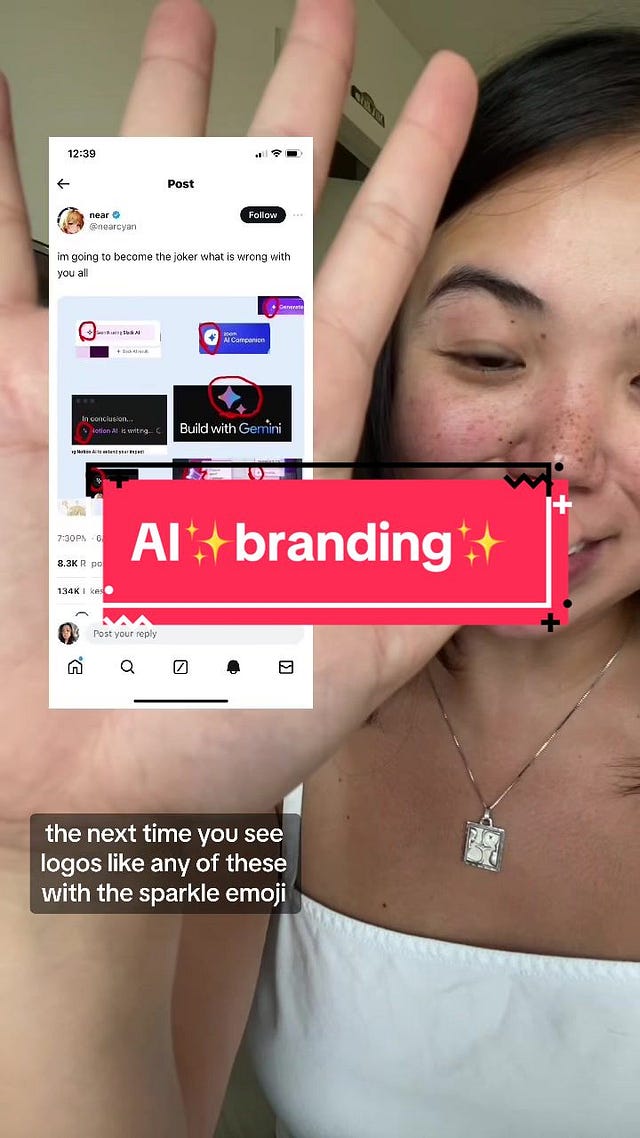
I keep an eye on comments and stitches, but I don’t spend a ton of time. Sometimes I’ll answer clarifying questions. The thing that I’ve learned over the course of several years of posting on TikTok is you need to be strategic. If you fear that this will take over your life and you won’t be able to report because you’ll be spending so much time reading the comments or responding to every imprecise take or misunderstanding, maybe it’s not the platform for you. Me, I will do some moderating of my comments if there’s something just straight up wrong or weird conspiracy stuff or harassing or abusive comment, I’ll just delete them. I don’t care. But besides that, I kind of let the conversation evolve. There are a lot of people who love to comment on TikTok. They never post on TikTok, but they love to comment. And so I do find it to be an interesting window into how people are taking in information, what they find interesting about my work or my stories and where their brain is going next. That can inform my future reporting as well.
 Tiktok failed to load.
Enable 3rd party cookies or use another browser
Similar to how weird it is to watch news influencers take our work, sometimes it feels like people expect journalists to exhibit the behavior of a creator.

I find it really funny when people call me a creator. My editor in chief Nilay Patel and I talk a lot about when we are reporters competing in arenas where other kinds of content reigns, our competitive advantage is how we do our job. I’m not like influencers because I don’t make any money on this platform. I have videos that have gotten millions of views; I haven’t made a dime. I don’t do sponsorship. I don’t read ads. I don’t do product placement, I don’t get paid by anyone other than Vox Media. And when I’m on these platforms, I’ve taken the opposite approach: Rather than leaning into the content creator ethos or norms, I want to differentiate myself and be like, “I’m not like these other girls,” to say it colloquially. This is my job. I’m here because I think you might be interested in this information, and I am not going to act like a content creator because I’m not one.
Another journalist that makes the same point as Mia Sato is Sophia Smith-Galer. She also raised the question: why am I not using my journalism and letting other people create content from it?
Wowww, I loved this. So much to chew on.